
Smart Heating Controls That Actually Save Money: UK Homeowner’s 2025 Guide
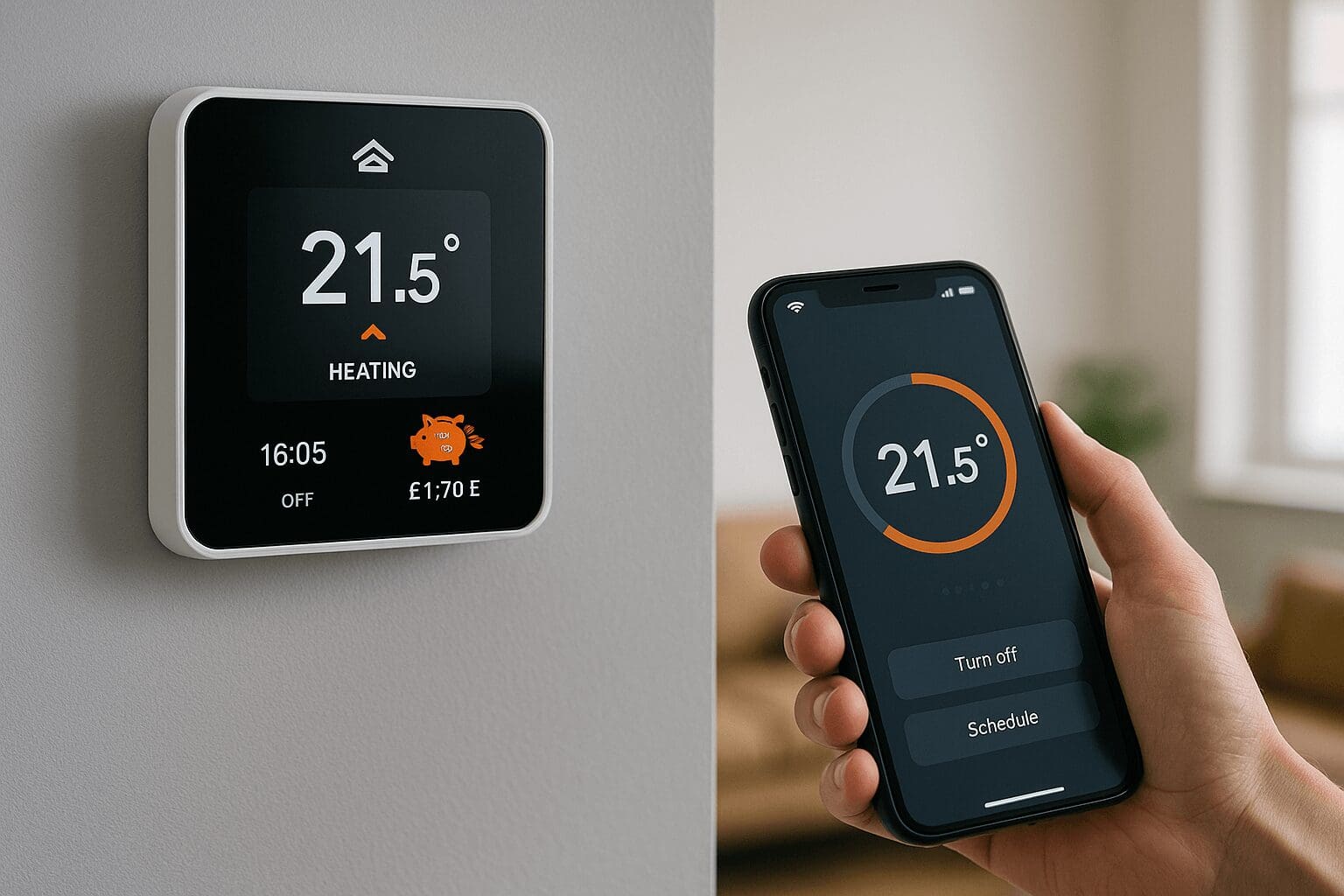
A smart control will not make a badly insulated house cheap to heat, and anyone who tells you it will is selling something. What it does do is stop you heating rooms nobody is in, and stop the heating running when the house is empty — and in most homes, that is where the waste actually is. Here is an honest look at the systems we fit, what each is good at, and which one is likely to suit your boiler.
Understanding Smart Heating Control Benefits
Where the Savings Actually Come From
We will not put a percentage on this, because the honest answer is that it depends entirely on how you currently run your heating. A household already using a well-set timer and TRVs has less to gain than one leaving the heating on constantly all winter.
What a smart control gives you is the ability to stop doing the wasteful things:
- Heating the whole house when only one room is in use
- Heating an empty house because nobody changed the timer
- Running rooms hotter than they need to be because the only control is a dial in the hall
- Leaving the heating on when the weather turns mild
If none of those apply to you, a smart control will be a convenience rather than a saving. We would rather say that than sell you one on a false promise.
How Smart Controls Save Money
Precise Temperature Control:
- Eliminate heating overshoots and undershoots
- Optimise heating schedules for occupancy patterns
- Prevent unnecessary heating of unused rooms
Adaptive Learning:
- Learn household routines automatically
- Adjust heating timing for optimal comfort and efficiency
- Account for external temperature changes
Remote Management:
- Adjust heating from anywhere to prevent waste
- Receive alerts for system issues
- Monitor energy usage in real-time
Top Smart Heating Systems for UK Homes
1. Nest Learning Thermostat (3rd Generation)
Key Features:
- Auto-scheduling learns your routine
- Geofencing detects when you’re away
- Energy history tracks usage patterns
- Works with most conventional UK boilers and heating systems
Best For: Tech-savvy homeowners wanting comprehensive automation with minimal setup effort.
2. Hive Active Heating 2
Key Features:
- British Gas ecosystem integration
- Simple app control and scheduling
- Holiday mode for extended absences
- Compatible with existing Hive products
Best For: Homeowners preferring UK-based support and simple, reliable operation.
3. Tado Smart Thermostat V3+
Key Features:
- Weather adaptation technology
- Open window detection
- Geofencing for multiple occupants
- Works with heat pumps and traditional boilers
Best For: Energy-conscious users wanting maximum efficiency optimisation.
4. Honeywell Evohome
Key Features:
- Individual room temperature control
- Up to 12 zones per system
- Professional installation required
- Advanced scheduling per room
Best For: Large homes wanting precise room-by-room control.
Smart TRVs: Room-by-Room Control
Leading Smart TRV Systems
Drayton Wiser. Individual radiator heads plus a hub that talks to your boiler. Straightforward to expand a radiator at a time, which makes it a sensible starting point if you want to do the main rooms first and add to it later.
Tado Smart Radiator Thermostats. Need a bridge to connect to your network, and pair well with the Tado thermostat if you are already using one. Open-window detection is genuinely useful in older houses.
Honeywell evohome Radiator Controllers. The most capable of the three and the most expensive, built for proper multi-zone control across a larger house. It needs its own controller and is worth doing properly rather than piecemeal.
Costs rise with the number of radiators you want to control, and every system needs its hub or bridge on top of the heads themselves. Tell us how many rooms you want zoned and we will price it for you before you commit to anything.
Smart TRV Benefits
- Heat only occupied rooms
- Individual room scheduling
- Window-open detection
- Integration with main thermostat
- Genuine control over rooms a single hall thermostat cannot reach
Installation Requirements and Compatibility
Boiler Compatibility Check
Compatible Systems:
- Combi boilers (compatible with almost all modern smart controls)
- System boilers with hot water cylinders
- Heat-only boilers with separate hot water
- Heat pumps (check specific model compatibility)
Wiring Requirements:
- Most smart thermostats require mains power connection
- Some wireless models use battery power
- Professional installation recommended for safety and warranty
Common Installation Challenges
Older UK Properties:
- Limited wiring to thermostat location
- Complex heating systems with multiple zones
- Unreliable WiFi coverage throughout property
Solutions:
- Wireless thermostats for limited wiring
- WiFi extenders for improved connectivity
- Professional assessment for complex systems
Advanced Features Worth Paying For
Weather Compensation
How it works: adjusts the heating according to the outdoor temperature, so the boiler works less hard on mild days. Available in: Tado, and the more advanced Nest settings.
Multi-Zone Control
Benefits: heat only the areas you are actually using, which matters most in larger houses where whole floors sit empty for much of the day. Cost: depends on how many zones you want and how much wiring is involved — we will quote it once we have seen the property.
Integration with Smart Home Systems
Platforms: Alexa, Google Home, Apple HomeKit Benefits: Voice control, automation routines Energy impact: Minimal direct savings but improved convenience
What We See in Kent Homes
We fit these controls across Tonbridge, Tunbridge Wells and the surrounding villages, and a few patterns come up again and again.
The biggest wins are behavioural, not technical. The households that notice a real difference are the ones who were previously heating the whole house to one temperature all day. Zoning off bedrooms and spare rooms during the day is where most of the waste disappears.
Older properties benefit most from smart TRVs. In the Victorian and Edwardian terraces around Tonbridge, rooms heat and lose heat at very different rates. A single hall thermostat cannot cope with that; per-radiator control can.
Geofencing matters more in some households than others. If someone is home most of the day, it does very little. If the house empties from eight until six, it does a lot.
A smart control will not fix a system fault. If radiators are cold at the bottom, if the boiler short-cycles, or if the pressure keeps dropping, a new thermostat will not help. We will tell you that when we look, rather than fitting one and letting you find out.
Installation Process and Costs
DIY vs Professional Installation
DIY Installation:
- Suitable for: Simple wireless thermostats
- Requirements: basic electrical knowledge, good WiFi, and a control that is genuinely wireless
Professional Installation:
- Required for: Wired thermostats, multi-zone systems
- Cost: charged at our standard hourly rate — £95 + VAT for the first hour, always billable, then £47.50 + VAT per 30 minutes. Most single-thermostat installs are done within the first hour.
- Benefits: warranty protection, safety compliance, and a system that is actually set up correctly rather than left on its defaults
What’s Included in Professional Installation
- System compatibility assessment
- WiFi connectivity optimisation
- Initial setup and user training
- Integration with existing heating controls
- Our 12-month workmanship guarantee on installations (90 days on repairs)
Maximising Smart Control Savings
Optimal Temperature Settings
Recommended temperatures:
- Living areas: 18-21°C when occupied
- Bedrooms: 16-18°C (cooler promotes better sleep)
- Unused rooms: 12-16°C (prevent dampness)
- Night setback: 2-4°C reduction during sleep hours
Smart Scheduling Strategies
Weekday patterns:
- Heat before wake-up time
- Reduce temperature during work hours
- Warm home before evening return
- Night setback during sleep
Weekend adjustments:
- Later morning heating start
- Maintain comfort during day
- Account for different occupancy patterns
Integration with Other Energy Measures
Combine smart controls with:
- Improved insulation (walls, loft, floors)
- Efficient boiler servicing
- Smart home automation
- Energy monitoring systems
Cumulative savings: Can achieve 25-35% total heating cost reduction
Common Mistakes to Avoid
1. Oversized System Selection
Problem: Paying for features you won’t use Solution: Assess actual needs before purchasing premium systems
2. Poor WiFi Coverage
Problem: Unreliable connectivity affecting performance Solution: Test WiFi strength throughout property before installation
3. Inadequate User Setup
Problem: Suboptimal schedules reducing savings potential Solution: Professional setup or comprehensive user training
4. Ignoring Maintenance
Problem: Reduced efficiency over time Solution: Regular system updates and annual heating system servicing
Future-Proofing Your Investment
Emerging Technologies
Heat pump integration: Most smart systems now compatible AI optimisation: Advanced learning algorithms improving Grid integration: Time-of-use tariff optimisation Renewable integration: Solar and battery system compatibility
Government Initiatives
Net zero targets: an increasing focus on home energy efficiency. Building regulations: heating controls requirements have tightened over successive updates. Government funding schemes come and go — check Gov.uk for what is currently available rather than relying on any figure quoted on a website.
Smart heating controls are one of the more sensible home energy improvements available, provided you go in with realistic expectations. They give you finer control over where and when your house is heated, they are genuinely more pleasant to live with than a dial in the hall, and in a household that was previously heating empty rooms they will pay you back. Fit one on top of an ailing system, though, and you have an expensive thermostat on a boiler that still needs attention.
For professional smart heating control installation and advice, contact Plumbing Angels on 01732 792 454. Our Gas Safe engineers specialise in smart heating system integration throughout Kent.

Frequently Asked Questions
How much can smart heating controls really save on my energy bills?
It depends entirely on how you heat your home now. If you already run a well-set timer and use your TRVs, the saving will be modest. If you currently heat the whole house all day whether anyone is in or not, the saving can be substantial. We will give you an honest view for your property rather than a percentage we cannot stand behind.
Will smart heating controls work with my existing boiler?
Most smart thermostats work with the great majority of UK heating systems, including combi, system and heat-only boilers. Heat pump compatibility varies by model, so check the specification before you buy — or ask us and we will check it for you.
Is professional installation necessary for smart heating controls?
Wireless battery-powered units can be DIY installed, but wired thermostats require professional installation for safety and warranty coverage. Multi-zone systems always need professional setup.
How long does it take for smart heating controls to pay for themselves?
That depends on what you paid, how you were heating the house beforehand and how much you change your habits afterwards. A household that was leaving the heating on constantly will see it back far sooner than one that was already careful. Anyone quoting you a fixed payback period does not know your house.
Can I control my heating remotely with smart controls?
Yes, all modern smart heating systems offer smartphone app control from anywhere with internet connectivity. This includes scheduling, temperature adjustment, and system monitoring capabilities.
Do smart heating controls work during power cuts?
Most systems have battery backup for basic operation, but full smart features require mains power and WiFi connectivity. Traditional manual override is usually available during outages.
Smart controls give you control. What you do with it is where the saving comes from.
Need a hand from a real engineer?
Our Gas Safe team covers the whole of Kent — free fixed quotes on new boilers, clear rates on repairs and servicing.
Call 01732 792 454