
Landlord Gas Safety Certificates: What They Cost and What's Actually Checked
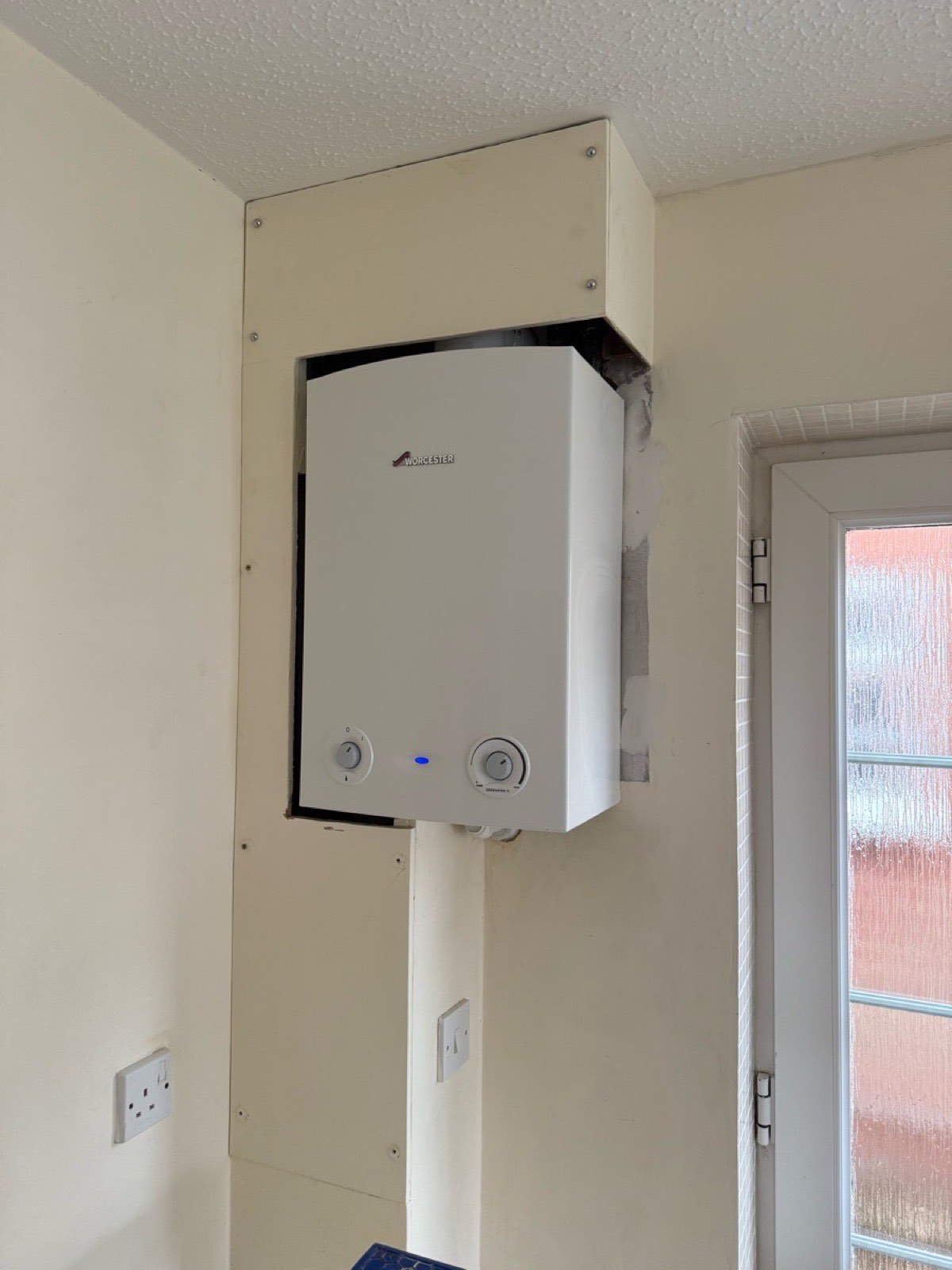
If you let a property with any gas appliance in it, the law requires a gas safety check every twelve months by a Gas Safe registered engineer, and a record of that check given to your tenants. The price depends on how many appliances are in the property, which is why you will rarely see a single flat figure quoted honestly — a one-bedroom flat with a combi boiler and nothing else is a very different job from a house with a boiler, a gas hob and a gas fire.
Here is what the certificate actually is, what we check when we turn up, and what makes one property cost more than another.
What a landlord gas safety certificate actually is
The document is properly called a Landlord Gas Safety Record. Most people still call it a CP12, which was the old form number, and plenty of landlords call it a certificate. They all mean the same thing.
It is a record of an annual safety check on every gas appliance and flue in the property that you, as the landlord, are responsible for. It is not a guarantee that an appliance will keep working, and it is not a service. It is a snapshot: on this date, these appliances were checked, and here is what was found.
Your duties come from the Gas Safety (Installation and Use) Regulations 1998. In short: the check has to happen every twelve months, it has to be done by a Gas Safe registered engineer, and your tenants have to be given a copy — within 28 days for existing tenants, or at the start of the tenancy for new ones. You need to keep the records for two years.
What the engineer actually checks
This is the part most landlords have never seen described, because the engineer does it while you are at work. On every gas appliance the check covers:
- That the appliance is burning correctly. We test the gas pressure and the burner, because an appliance burning badly is the one that produces carbon monoxide.
- That the flue is clear and taking fumes outside. A blocked or damaged flue is one of the genuinely dangerous faults, and it is not something a tenant would ever spot.
- That ventilation is adequate. Gas appliances need air. Blocked airbricks and sealed-up vents come up more often than you would think, usually because somebody was trying to stop a draught.
- That safety devices work. Flame supervision devices, for example, which shut the gas off if the flame goes out.
- That the installation pipework is sound, with no leaks and the correct tightness test.
If something fails, we will tell you there and then what it is, how serious it is, and what it needs. Where an appliance is immediately dangerous it has to be disconnected — we cannot leave it in service, and no honest engineer would.
How often, and the rule that saves you money
Every twelve months. The part landlords often miss is that you do not have to wait until the last minute.
A check can be carried out up to two months before the anniversary date without losing the original deadline. So if your certificate runs out on 1 December, you can have the check done any time from 1 October and the new expiry date stays 1 December — you do not lose the weeks you gained. That matters because it lets you group several properties into one visit rather than chasing individual dates through the year.
Landlords with more than one property in the same area often ask us to do the lot in one run. It is easier for everyone, and it means we are not making separate journeys.
What affects the price
We would rather explain what moves the number than quote you a figure that turns out to be wrong when we arrive:
- How many gas appliances there are. This is the main one. A single combi boiler is the quickest possible version of this job. Add a gas hob, a gas fire or a separate cylinder and the check takes longer.
- Access. If the boiler is boxed in, or the meter is behind a locked cupboard nobody has the key for, the visit takes longer than it should.
- Whether you want a service at the same time. More on that below — combining them is usually the sensible move.
- Where the property is. We are based in Tonbridge and cover the whole of Kent and into East Sussex, so most of our work is local.
For a straight answer on your property, ring us on 01732 792 454 with a rough idea of what gas appliances are in it. It is a thirty-second conversation and you will get a real number rather than a range.
A certificate and a service are not the same thing
This trips up a lot of landlords, and some less scrupulous outfits are happy to let it stay confusing.
A gas safety check answers one question: is this appliance safe right now. A boiler service is maintenance — cleaning components, checking the condition of parts that wear, and keeping the manufacturer’s warranty valid. A boiler can pass a safety check while being close to a breakdown, because “safe” and “in good health” are different tests.
Our annual boiler service is a flat £95 plus VAT, with any additional appliance on the same visit at half price. If you let property in Kent, our landlord gas safety certificate service page sets out the legal duty, what we check, and how portfolio bookings work. If you are already booking a safety check, having the service done at the same visit is the cheaper way round — one visit, one journey, one appointment for the tenant to be in for.
For a rental property we would generally suggest doing both. The certificate keeps you legal. The service is what stops you getting a call in January about no heating, which then becomes an emergency repair at the worst possible time of year.
What happens if you do not have one
The gas safety duty is enforced by the Health and Safety Executive, and it is not a technicality. Beyond the legal exposure, an out-of-date record can affect your position if something goes wrong in the property, and letting agents will generally not market a property without one.
The more common real-world problem is smaller and more annoying: a tenant asks for the record, you cannot find it, and you discover the check lapsed four months ago. Setting a reminder two months before the expiry date — and using that two-month window — is the whole fix.
Booking one in Kent
We carry out landlord gas safety checks across Kent and East Sussex from our base in Tonbridge, and we are Gas Safe registered under number 951167. You are welcome to ask to see the card at the door — a genuine engineer will expect you to.
Call 01732 792 454 or get in touch here with the property address and what gas appliances are in it, and we will tell you the price and when we can get there. If you have several properties, say so — we will try to put them together into one visit.
Need a hand from a real engineer?
Our Gas Safe team covers the whole of Kent — free fixed quotes on new boilers, clear rates on repairs and servicing.
Call 01732 792 454