
Radiator Not Heating Up? Complete Troubleshooting Guide for UK Homes
There’s nothing worse than a radiator that refuses to heat up, especially during the cold UK winter months. Waking up to a freezing bedroom or sitting in a chilly living room is both uncomfortable and potentially damaging to your home. The good news is that many radiator heating problems can be diagnosed and fixed without calling an engineer, though some issues do require professional attention. This guide walks you through the most common radiator problems and provides step-by-step troubleshooting solutions.
Why Are My Radiators Not Heating?
Radiators stop working for several reasons. Understanding the root cause is the first step toward fixing the problem. Let’s explore the most common culprits:
Air Trapped in the System: When air enters your heating system during maintenance or repairs, it can block water flow through radiators, preventing them from heating properly. Air naturally rises to the highest point of your system, often settling at the top of radiators.
Sludge and Debris Buildup: Over time, rust particles, mineral deposits, and corrosion accumulate inside your pipes and radiators. This sludge reduces water flow, making radiators lukewarm or cold. Older systems are particularly prone to this problem.
Thermostatic Radiator Valve (TRV) Issues: Most modern radiators have TRVs that automatically adjust temperature. If the TRV is stuck, faulty, or accidentally turned to zero, that radiator won’t heat.
Unbalanced Heating System: In multi-radiator systems, water follows the path of least resistance. If one radiator receives too much hot water, others further away don’t get enough, resulting in cold radiators.
Low System Pressure: Boilers have a minimum pressure requirement (usually 1.0-1.5 bar) to function properly. If pressure drops below this threshold, the boiler won’t heat the system effectively.
Blocked Radiator: In rare cases, a radiator’s internal valve becomes blocked, completely preventing water circulation through that specific radiator.
How to Bleed a Radiator: Step-by-Step Guide
Bleeding a radiator is the first troubleshooting step for most heating problems. It’s a simple process that takes just 5-10 minutes and requires minimal tools.
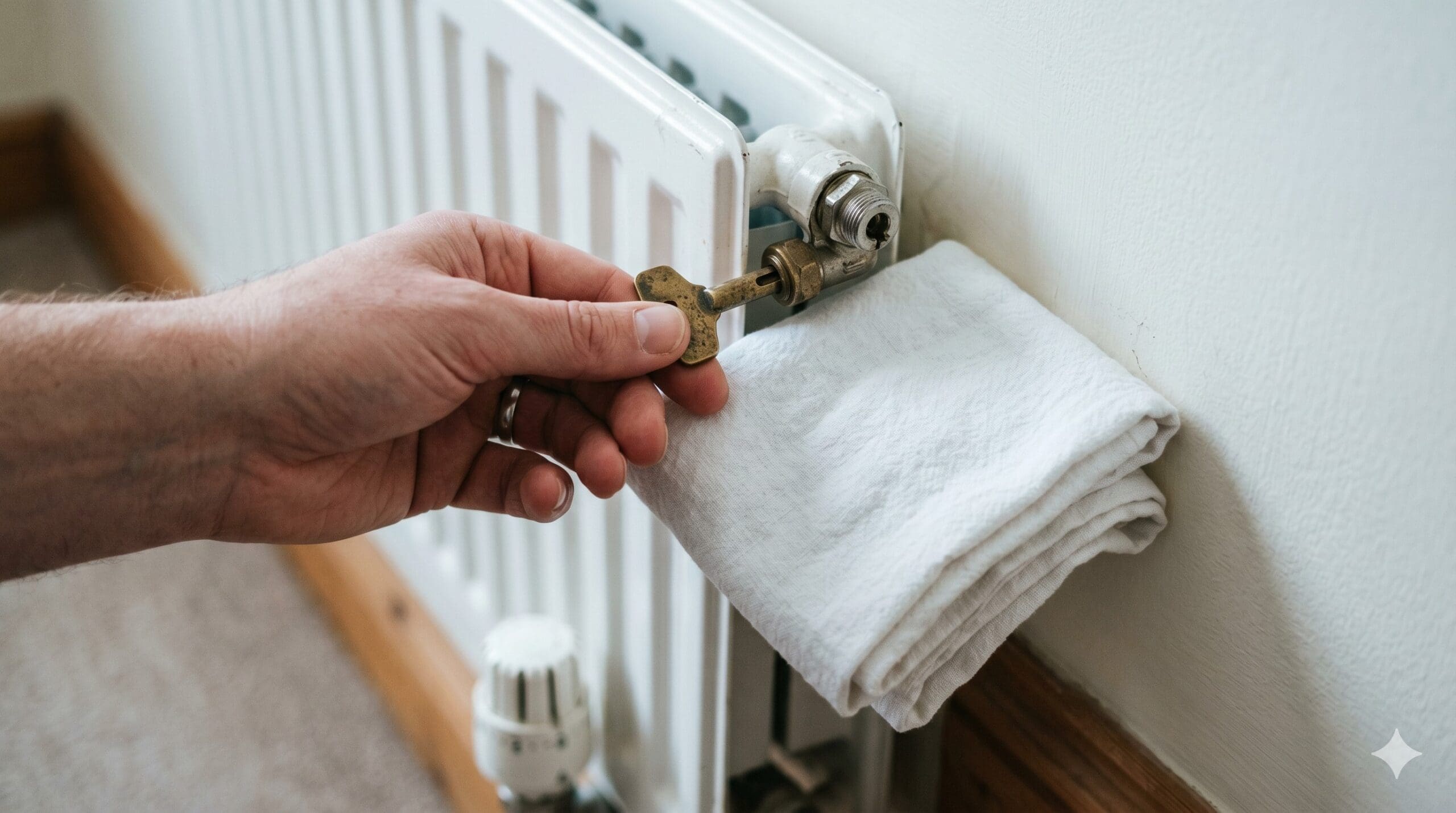
What You Need: A radiator bleed key — a few pounds from any DIY shop — plus a cloth or towel and a small container or bowl.
Step 1 – Turn Off Your Heating: Switch off your boiler and allow the system to cool for 15 minutes. Never bleed a hot radiator as steam can cause burns.
Step 2 – Locate the Bleed Valve: On the top corner of your radiator, you’ll find a small bleed valve (often hexagonal). This is usually at the opposite end from the inlet valve.
Step 3 – Prepare a Container: Place your cloth under the bleed valve and position your bowl or container to catch any water that escapes.
Step 4 – Open the Valve Slowly: Insert the bleed key into the valve and turn anticlockwise (left) very slightly. Don’t turn it more than half a turn. You should hear a slight hissing sound as air escapes.
Step 5 – Listen and Watch: When you hear air hissing, keep the valve open until water starts flowing out steadily. Once water appears with no air, close the valve immediately by turning clockwise (right).
Step 6 – Check System Pressure: After bleeding, check your boiler’s pressure gauge. If pressure has dropped below 1.0 bar, you’ll need to re-pressurise the system (consult your boiler manual for instructions).
Pro Tip: Bleed radiators with a thermostatic valve in summer when your heating is off. In winter, start with radiators furthest from the boiler and work your way back.
Thermostatic Radiator Valve (TRV) Problems
Thermostatic radiator valves maintain temperature automatically by expanding and contracting as heat changes. If your radiator isn’t heating, the TRV may be the culprit.
Is Your TRV Stuck? Gently tap the valve body with a hammer or wrench. Sometimes debris causes sticking. If it’s frozen in winter, wrap it in a hot cloth to warm it up.
Check TRV Setting: Look at the top of the valve. You’ll see numbers (usually 0-5) or symbols representing temperature settings. If it’s set to 0, no heat will pass through that radiator. Adjust to a mid-range setting (2-3) and wait 30 minutes for the radiator to warm.
Is the TRV Faulty? If tapping doesn’t help and adjusting the setting produces no change, the TRV is likely faulty and needs replacement. Contact a Gas Safe engineer for professional replacement.
Sludge Buildup and Power Flushing
Sludge accumulation is a major cause of uneven heating and cold radiators, particularly in systems over 10 years old. Sludge reduces water circulation, forcing your boiler to work harder and increasing energy bills.
Signs of Sludge Problems: Some radiators are hot while others are cold; your boiler is making banging or gurgling noises; radiators need bleeding frequently; system pressure drops regularly; heating takes a very long time to warm up.
What is Power Flushing? Power flushing is a professional cleaning process that uses high-velocity water and cleaning chemicals to dislodge and remove sludge, rust, and debris from your system. A qualified engineer connects a machine to your heating circuit and flushes the system thoroughly.
Duration: A power flush usually takes most of a day, depending on the size of the system and how much sludge has built up. We quote each one individually after seeing the system — the price depends on how many radiators there are and how bad the build-up is, so a figure quoted before we have looked would only mislead you.
Should You Add Inhibitor? After power flushing, most engineers add a system inhibitor to prevent future sludge formation. This is highly recommended for maximum system longevity.
Balancing Your Radiators
In systems with multiple radiators, some naturally receive more hot water than others due to system layout. Balancing ensures equal water distribution and consistent heating throughout your home.
How Radiator Balancing Works: Each radiator has two valves – a lockshield valve (usually covered with a plastic cap) and a thermostatic valve. The lockshield valve restricts flow; adjusting these valves balances the system.
Manual Balancing Process: Using a radiator key, slightly close the lockshield valve on radiators that are too hot while opening it slightly on cold radiators. This is a trial-and-error process that requires patience. Many homeowners find professional balancing easier.
Professional Balancing: A heating engineer uses specialised equipment to measure water temperature across the system and makes precise adjustments. Cost is typically a modest amount but the results are superior to DIY attempts.
Cold at Bottom, Hot at Top vs Hot at Bottom, Cold at Top
The pattern of cold spots on your radiator can indicate the underlying problem:
Cold at the Bottom, Hot at Top: This is usually air trapped at the bottom of the radiator or a blockage preventing full water circulation. Solution: Try bleeding the radiator. If that doesn’t work, the radiator may need flushing or replacement.
Hot at the Bottom, Cold at the Top: This indicates air trapped at the top of the radiator (the most common scenario). Solution: Bleed the radiator using the method described above. This typically resolves the issue immediately.
Completely Cold Radiator: If your radiator is cold throughout, the problem is usually a stuck valve (thermostatic or lockshield) or a blocked inlet. Check valve settings first, then contact an engineer if manual adjustments don’t help.
When to Call a Professional Engineer
While many radiator issues are DIY-fixable, certain situations require professional expertise:
Multiple Radiators Are Cold: If several radiators won’t heat despite bleeding and valve adjustments, your system may have low pressure, sludge buildup, or a boiler issue. Call an engineer.
Boiler Pressure Won’t Hold: If your boiler pressure keeps dropping below 1.0 bar, there’s likely a leak in the system. Professional diagnosis is essential.
Radiators Need Frequent Bleeding: If you’re bleeding radiators monthly, air is constantly entering the system, indicating a leak. An engineer must locate and repair it.
TRV Won’t Respond to Adjustment: A faulty thermostatic valve needs professional replacement.
Boiler Not Igniting: If your boiler won’t fire up despite correct pressure, professional service is required.
Prevention Tips for Future Problems
Maintain Your System: Service your boiler annually. This prevents many heating issues before they start.
Check System Pressure Monthly: Make it a habit to glance at your boiler’s pressure gauge. Pressure between 1.0-1.5 bar is ideal.
Bleed Radiators Seasonally: Before winter heating season, bleed all radiators to remove any trapped air.
Consider Power Flushing Every 5 Years: If your system is older, periodic flushing prevents sludge accumulation.
Protect Radiators from Damage: Don’t bang radiators or place heavy objects against them, as this can damage internal components.
Need Professional Help? Contact Plumbing Angels
If your radiator troubleshooting hasn’t resolved the problem, it’s time to call in the professionals. Plumbing Angels specialises in heating system diagnostics, repairs, and maintenance across Tunbridge Wells and Kent. Our Gas Safe registered engineers can quickly identify why your radiators aren’t heating and implement effective solutions, whether that’s power flushing, TRV replacement, or boiler repair.
Phone: 01732 792 454
Website: plumbingangels.co.uk
We offer emergency call-outs for heating breakdowns and provide free advice over the phone. Let us get your radiators heating properly again.
Need a hand from a real engineer?
Our Gas Safe team covers the whole of Kent — free fixed quotes on new boilers, clear rates on repairs and servicing.
Call 01732 792 454